The Problem
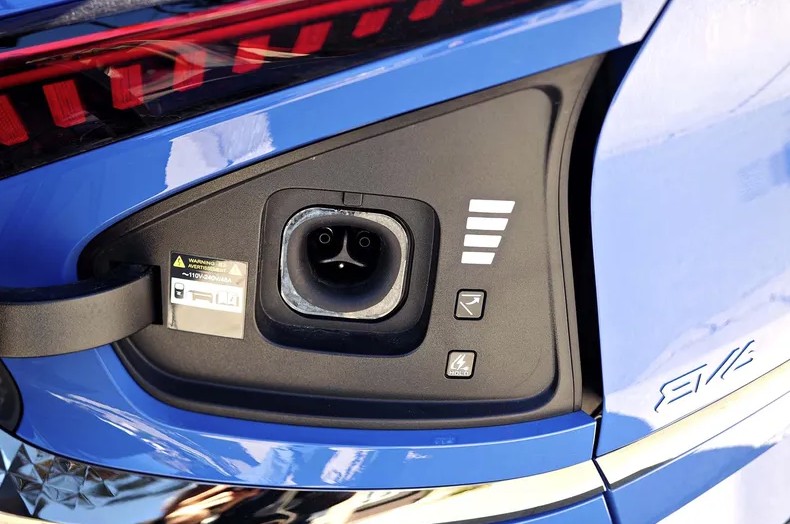
Customer reported that every DC fast charge session ended at approximately 50-55% SOC regardless of charger or location. The charger display showed "charging complete" prematurely. AC Level 2 charging worked correctly and could charge to 100%. The issue appeared after a particularly hot summer day. P1ABA (Charge Port Temperature Sensor 1 Circuit) and P1AB9 (Charge Port Temperature Sensor 2 Circuit) stored as current faults. Shop suspected onboard charger failure.
Diagnostic Procedure
-
1
1. Connect Kia-capable scan tool (GDS2 for Kia/Hyundai, or Autel with E-GMP coverage). Confirm P1ABA and P1AB9 as current faults. Check if any charging module faults are also present.
-
2
2. Access charge port temperature sensor live data channels. EV6 has two NTC temperature sensors embedded in the CCS2 charge port assembly - one monitoring the AC pins and one the DC pins. At ambient temperature both should read 15-30C. A failed sensor reads -40C, open circuit, or implausibly high.
-
3
3. Attempt a DC fast charge session while monitoring temperature sensor live data. Observe at what temperature reading the session terminates. If one sensor reads above 85C while the other reads ambient, the high-reading sensor is faulty.
-
4
4. Physically inspect the charge port connector. Check for heat discoloration, melted plastic, or burned pins at the DC inlet pins. A genuinely overheated port will show visible damage. If no visible damage, the sensor circuit is the fault, not actual overheating.
-
5
5. Measure resistance of each temperature sensor at the charge port harness connector (with port unplugged). An NTC sensor at 25C should read approximately 10 kohm. Open circuit or near-zero resistance confirms sensor failure.
-
6
6. Check for any available Kia/Hyundai TSBs on EV6 charge port temperature sensor failure for the production year. Temperature sensor failures in the E-GMP charge port assembly were documented across multiple 2022 build dates.
-
7
7. If sensor resistance is out of spec, the entire charge port assembly must be replaced - the sensors are not serviceable separately on EV6.
Resolution & Root Cause
Live data during attempted DC fast charge showed port temperature sensor 2 (DC pin side) reading 97C immediately at session start while sensor 1 read 24C consistent with ambient. Physical inspection of the charge port showed no heat damage or discoloration to the DC pins - confirming sensor failure, not genuine overheating. Sensor 2 resistance measured at the harness connector: open circuit (no reading). OBC was correctly terminating the session to protect the port based on the false overtemperature signal. Charge port assembly replaced under Kia warranty (confirmed open campaign for this VIN). After replacement, both sensors read 23C at ambient. DC fast charging restored to full rate with sessions completing to user-selected SOC target. P1ABA and P1AB9 cleared and absent on retest.
💡 Key Lesson
On Kia EV6 (and Hyundai Ioniq 6 sharing E-GMP platform), DC fast charging terminating early with P1ABA/P1AB9 codes points to the charge port temperature sensor assembly before the onboard charger. AC charging works normally because AC pins use a separate sensor. Always check live temperature sensor data during an attempted fast charge session - a sensor reading high immediately at session start without any actual pin heat damage is a failed sensor, not a thermal event. Check VIN for open campaigns before quoting parts.
About This Case
This case was solved remotely by an HVDesk specialist with 15+ years of hands-on experience across major EV platforms including Tesla, Hyundai/Kia, Volkswagen ID series, BMW i-series, and Ford EVs. The procedure was provided as structured remote support to an independent auto repair shop.